- 1.15K Posts
- 5.77K Comments




 3·9 hours ago
If you don’t like the games that other people make, then why don’t you macron?
 3·9 hours ago
Here’s how I might resolve this supposed dichotomy:
- “AI” doesn’t actually exist.
- You might be using technologies that are called “AI” but there is no actual “intelligence” there. For example, as OP mentions, LLMs are extremely limited and not actually “intelligent”.
- Since “AI” doesn’t actually exist, since there’s no objective test, etc… “AI” can be anything and do anything.
- So at the extremes we get the “AI” God and “AI” Devil
- “AI” God - S/he saves the economy, liberates us from drudgery, creates great art, saves us from China (\s), heralds the singularity, etc.
- “AI” Devil - S/he hallucinates, steals jobs, destroys the environment, is a tool of the MIC, murders artists, is how China will destroy us (\s), wastes of time and resources, is a scam, causes apocalypses, etc.
Since there’s no objective meaning from the start, there’s no coherence or reason behind the wild conclusions are the bottom. When we talk about “AI”, we’re talking about a wide variety of technologies with varying values in various contexts. I think there are some real shitty people/products but also some hopefully useful technologies. So depending on the situation I might have a different opinion.
- “AI” doesn’t actually exist.
 2·10 hours ago
Doesn’t USA?
Yeah that’s infrastructure under capitalism. Explains the entire USA basically.
USA isn’t even talking a big game. It’s just the usual racism, patriarchy, colonialism, imperialism, capitalism, etc.

Was she wearing the Best Buy shirt or the Gamestop shirt?

 2·1 day ago
If you’re learning about “science” from youtube, then go ahead and believe in “AI”. jfc.
These channels are all trash from the start.

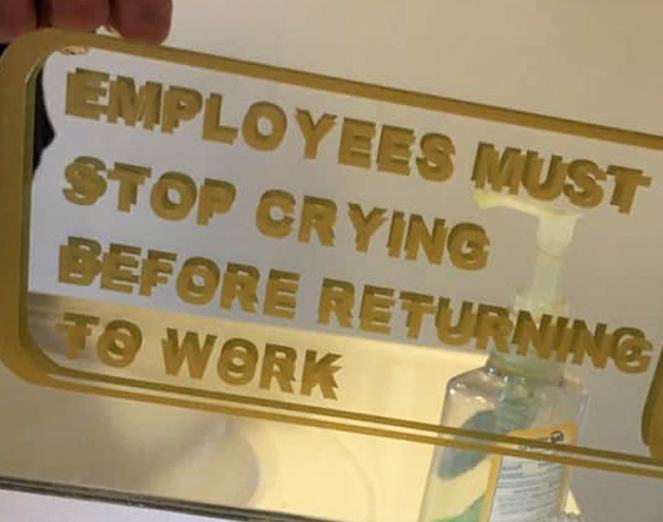






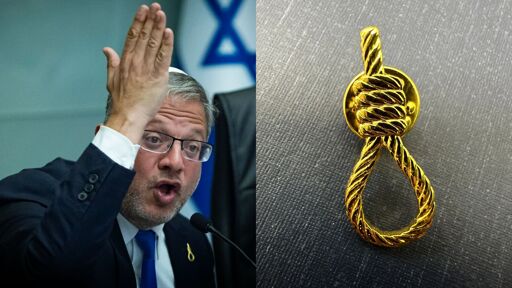
In a future where the whole world is a parking lot…

While it’s somewhat harsh to put these grifters on the same list as Hitler, it’s generally on point.

 2·3 days ago
As a “mathematician”… Yeah this is phony AF. Typical “AI” bullshit.
The field of application of Grothendieck’s toposes goes beyond the strictly mathematical framework. It makes it possible to connect literary works, which seem at first glance to have nothing in common, as evidenced by the connection between Homer’s The Iliad, Kurāʿ’s al-Muntakhab and Dostoyevsky’s The Idiot. This connection could in turn enrich research on topos, if it is taken seriously as an archeology [20], which invites to deepen the knowledge of things beyond binary oppositions to explore how things are formed
lmao. fraud. Foucault is cool and all, but dude was not writing about categories and sheaves. Not even close.
With Poincaré, we discover that building a bridge between things –a topos– can arise from an intuition
lol no. They can’t just call anything a “topos”. That’s not how math works. This paper is entertaining but that’s about it.
 2·3 days ago
Can always count on the dems for barely doing something completely ineffectual…



St. Fred will certainly be seated close to the Lord of All Bizkits.
* heaven metal
Support. As someone who grew up in a “christian” environment, it’s amazing how little many “christians” actually know or care about jesus and his message. It’s completely buried and obscured by random, irrelevant shit from paul, the old testament, etc.
belief in God is reiterated time and again as the main requirement for anyone to get any heaven time.
Reiterated by humans. I haven’t seen an official press release from god.

How else do you expect thiel to fight the anti-christ? He’s doing the hard work for all of us. Show some respect. \s
USA is entirely based on lies. That’s a big part of why “AI” is so popular.
A primary purpose of technology under capitalism is the violent enforcement of disgusting privilege at the expense of the planet and humanity.
Might be easier to make a white list.